
Sunny Side Up
AI Isn’t Replacing Scientists. It’s Giving Them Superpowers.
The quiet revolution in scientific discovery you’re not hearing about.
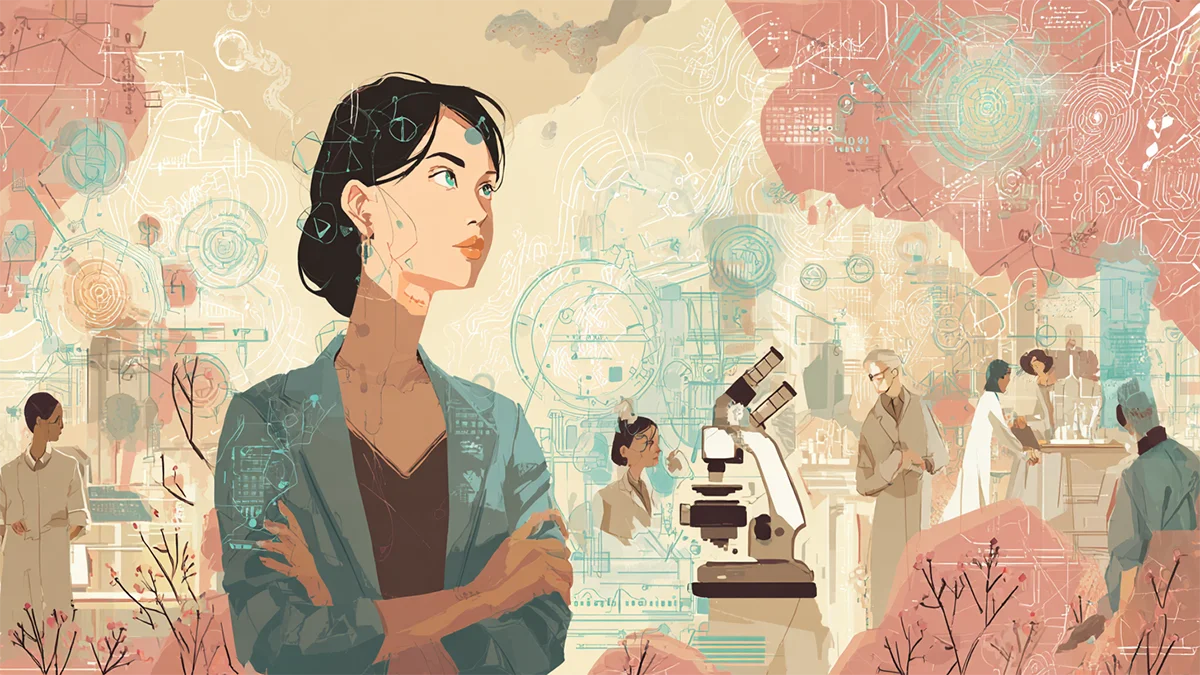
The AI breakthroughs that matter aren’t chatbots debating philosophy. They’re the tools helping scientists discover drugs faster, predict weather better, and understand proteins we couldn’t touch before.
AI as research partner
According to the 2025 State of AI Report, AI is becoming a genuine scientific collaborator. Google DeepMind’s Co-Scientist and Stanford’s Virtual Lab can now autonomously generate, test, and validate hypotheses.
That’s not “AI doing science.” That’s AI handling the tedious parts so researchers can focus on the creative leaps.
The protein folding revolution continues
AlphaFold just marked five years since cracking the protein folding problem — one of biology’s grand challenges. The ongoing impact is still expanding.
Meanwhile, Microsoft Research’s AI2BMD protein simulation is helping solve previously intractable problems in drug discovery and enzyme engineering. As Microsoft reported, this method could fuel biomedical research in protein design with unprecedented speed and precision.
Weather forecasting, transformed
Google’s WeatherNext 2 generates forecasts 8x faster with resolution down to 1 hour. It’s already being used to support weather agencies in making decisions.
Why does this matter? Better weather prediction saves lives. More accurate forecasts mean earlier evacuations, better disaster preparation, and smarter resource allocation.
The pattern across all of this
Notice what’s happening: AI isn’t replacing scientists. It’s augmenting them.
The human still asks the questions. The human still interprets results. The human still makes the creative leaps. But the AI handles the computational grunt work that used to take months.
It’s like giving every researcher a supercomputer and a tireless assistant — except the assistant actually understands the domain.
What’s coming next
The State of AI Report identifies several frontiers:
- Materials science — AI discovering new materials for batteries, semiconductors, and sustainable manufacturing
- Drug discovery — Profluent’s ProGen3 showed that scaling laws now apply to proteins, opening new possibilities
- Climate modeling — More accurate predictions of how climate systems interact
These aren’t theoretical. They’re in progress.
The story worth telling
“AI threatens to replace human creativity” gets clicks. “AI helps scientists work faster on hard problems” doesn’t.
But the second story is the one that’s actually happening. And it’s pretty exciting if you pay attention.